By Analyst Team · Updated 2026-07-13 · 12 min read
LIMITED TIME AVAILABILITY
Unlock Full ip-tv provider Access
Secure special promotional rates instantly before the window closes. Lock in your pricing model today before plans return to standard regional metrics.
What is an ip-tv provider Exactly?
An ip-tv provider delivers television content through your internet connection rather than traditional cable or satellite signals. Instead of broadcasting over airwaves or through coaxial cables, IPTV streams video data using the same protocols that power your email and web browsing.
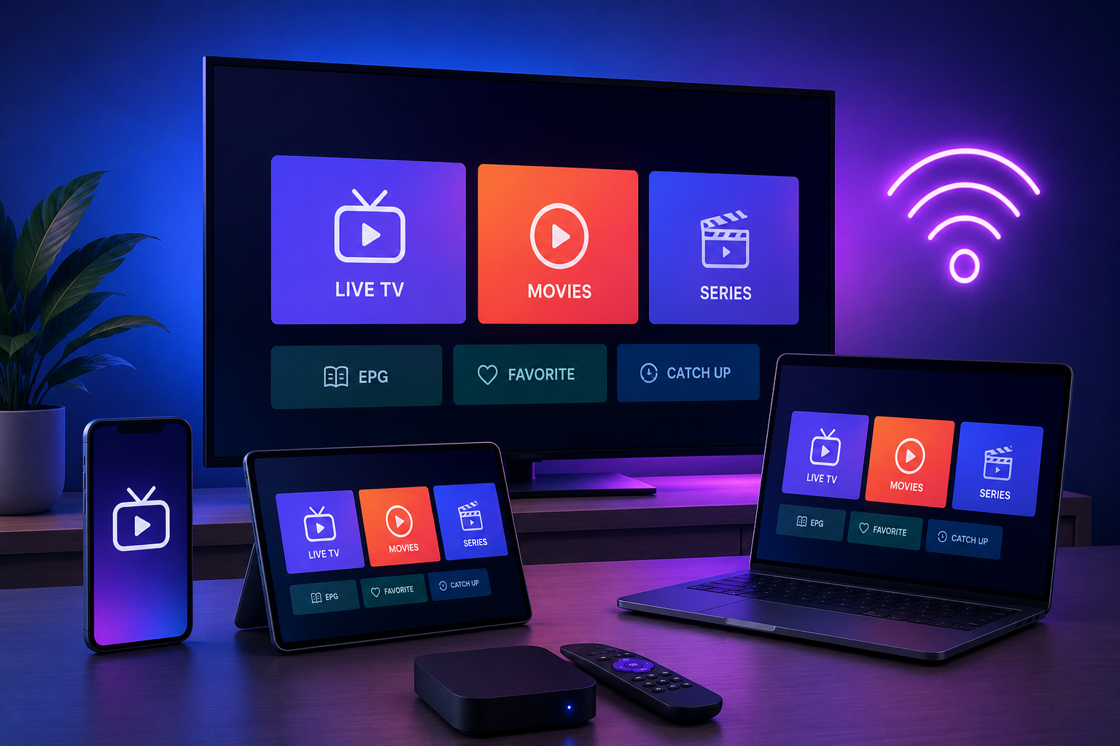
Think of it as Netflix, but for live television. A quality best ip-tv provider 2026 offers hundreds of live channels, on-demand movies, and sports packages that you can watch on smart TVs, phones, tablets, or computers. The picture illustrates a typical family setup where everyone enjoys different content simultaneously on their preferred devices.
The technology has matured significantly. Modern providers now deliver 4K resolution, 99.9% uptime, and channel counts that dwarf traditional cable packages. But not all services are equal, which is why we created this complete guide to help you navigate the landscape.
How IPTV Technology Works Step by Step
Understanding the mechanics helps you make smarter choices when comparing providers. Here is the simplified process of how IPTV delivers content to your screen:
Step 1: Your device sends a request for a specific channel or on-demand title. This request travels through your home internet to the provider's servers.
Step 2: The provider's server locates the requested content, converts it into data packets, and begins streaming it over the internet protocol.
Step 3: Your device receives these packets, reassembles them in the correct order, and decodes the video signal into images and audio you can watch.
Step 4: An electronic program guide (EPG) continuously updates, showing you current and upcoming programming across all channels available in your subscription.
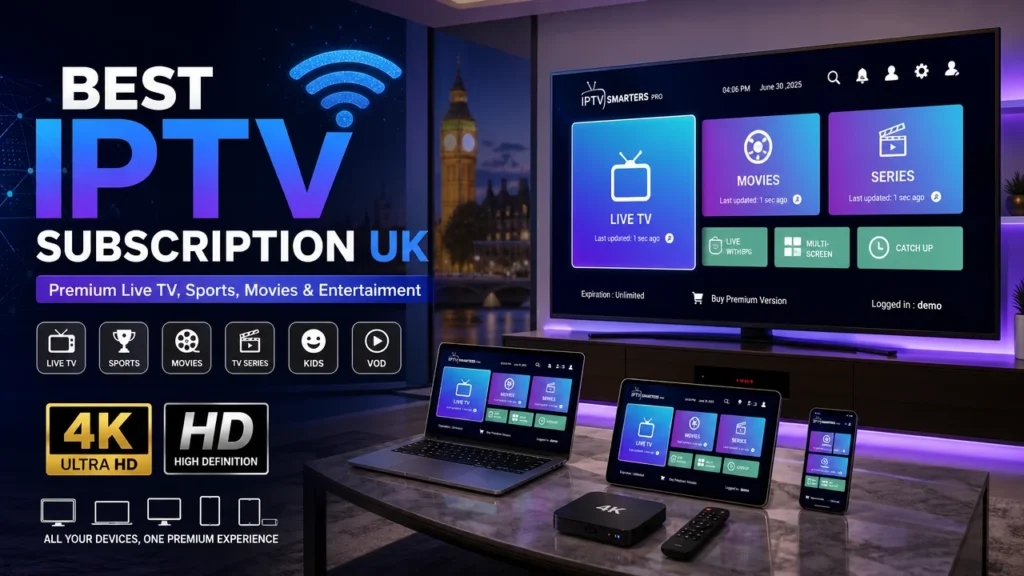
This entire process happens in under two seconds on a well-configured system. The image below shows a sleek modern interface from a premium ip-tv provider for sports, demonstrating the EPG navigation with real-time schedule data.
Concrete Benefits of Switching to an ip-tv provider
Customers who switch from traditional cable to an IPTV service report several measurable advantages. The value proposition goes beyond just saving money.
Cost savings: A cheapest ip-tv subscription can cost between $10 and $30 monthly, compared to $100+ for comparable cable packages. Annual savings often exceed $800 for the average household.
Device flexibility: Watch on any screen with an internet connection. Most providers support simultaneous streams across multiple devices, meaning different family members can watch different channels at the same time.
Content variety: Typical packages include 5,000 to 20,000 channels covering every genre imaginable. International channels, niche sports, and regional programming are standard inclusions.
No contracts: Most providers operate on month-to-month subscriptions. You can cancel anytime without early termination fees, giving you complete control over your entertainment budget.
Unlock complete high-definition information and priority access packs.
Claim This Special Offer for ip-tv provider →Honest Limitations You Must Consider
No technology is perfect. Transparency about potential drawbacks helps you make an informed choice about whether IPTV fits your lifestyle.
Internet dependency: A stable connection of at least 25 Mbps is essential for HD streaming. If your internet goes down, so does your television. Rural areas with limited broadband may experience frequent buffering.
Legality varies: While IPTV technology itself is completely legal, some providers stream content without proper licensing. You need to verify your where to buy ip-tv legally concerns before subscribing. Our recommendation section addresses this directly.
Server downtime: Even the most reliable ip-tv provider no buffering guarantee can experience occasional outages, particularly during major live events when millions of viewers tune in simultaneously.
Setup complexity: Unlike cable where you simply plug in a box, IPTV often requires installing third-party apps, configuring player software, and understanding basic network settings. Technophobes may find the initial setup challenging.
IPTV vs Cable: Honest Comparison
To help you visualize the differences, here is a direct comparison between a standard IPTV service and traditional cable television:
| Feature | IP TV Provider | Traditional Cable |
|---|---|---|
| Monthly cost | $10 – $30 | $80 – $200 |
| Channel count | 5,000 – 20,000+ | 100 – 500 |
| Device support | Smart TV, phone, tablet, PC, Fire Stick | Cable box only |
| Contract required | No, month-to-month | Usually 12–24 months |
| HD/4K quality | Yes, depends on internet speed | Yes, consistent but limited channels |
| On-demand library | 10,000+ movies and series | Limited, usually pay-per-view |
| Works during power outage | Only with battery backup | Only with battery backup |
As the table demonstrates, IPTV wins on cost, channel variety, and flexibility. Cable still holds an advantage in consistency since it doesn't depend on your home internet bandwidth competing with other devices.
Who Should Subscribe to an ip-tv Provider?
Different user profiles get different value from IPTV. Here is who typically benefits most:
Sports enthusiasts who want access to international leagues, pay-per-view events, and niche sports channels that cable rarely carries. An ip-tv provider for sports typically includes every major league from around the world.
Budget-conscious households looking to cut their entertainment expenses. Families spending $150+ monthly on cable can reduce that to $20-$40 with a quality IPTV subscription while gaining more content.
International viewers who need channels from their home country. Most providers carry packages dedicated to specific regions including Indian, Arabic, European, and Latin American content.
Tech-savvy cord-cutters who want complete control over their viewing experience. IPTV integrates with media servers like Plex and Jellyfin, allowing power users to record, organize, and stream content their way.
How to Get Started: Practical Numbered Steps
Follow this exact sequence to go from zero to watching IPTV in under 30 minutes:
Step 1: Assess your internet connection. Run a speed test at speedtest.net. You need minimum 25 Mbps for stable HD streaming and 50 Mbps for 4K content. Wired Ethernet connections always outperform Wi-Fi.
Step 2: Choose a compatible device. Most users opt for an Amazon Fire Stick, Android TV box, or a smart TV with native IPTV app support. Verify your device supports the provider's application before purchasing.
Step 3: Read independent ip-tv provider reviews reddit and trustpilot. Real user feedback reveals actual performance, customer support quality, and hidden issues that marketing pages never mention.
Step 4: Select a provider and subscribe. Start with a one-month or trial subscription if available. This minimizes risk while you evaluate channel quality, buffering frequency, and EPG accuracy.
Step 5: Install the required app. Most providers use TiviMate, IPTV Smarters, or a custom application. Download from the official store or follow provider instructions for sideloading.
Step 6: Configure your playlist. Enter the M3U URL or Xtream Codes provided in your welcome email. The app will automatically populate your channel list and program guide.
Step 7: Test and optimize. Check multiple channels during peak evening hours. Adjust video buffer size in app settings if you experience stuttering. Most issues resolve with a 3-5 second buffer setting.
Pros and Cons of Using an ip-tv Provider
✓ PROS
- Up to 90% cheaper than cable
- Watch on any device, anywhere
- 20,000+ channels available
- No long-term contracts
- Includes VOD libraries
- Catch-up TV features
✗ CONS
- Requires stable high-speed internet
- Legal gray areas with some providers
- Can buffer during peak hours
- Setup is more technical than cable
- Customer support varies widely
- No 911 emergency services
Frequently Asked Questions
Frequently Asked Questions
1. What is the best ip-tv provider 2026 for reliability?
The most reliable ip-tv provider no buffering services typically use premium CDN networks and have redundant server infrastructure. Top-rated options include providers with over 99.9% uptime guarantees, multi-server load balancing, and dedicated sports streaming servers. Always check recent reviews on independent forums before committing to a long-term plan.
2. How do I choose an ip-tv provider that offers the best value?
When you how to choose an ip-tv provider, evaluate three factors: channel selection matching your viewing habits, server location proximity to your region, and customer support response times. Request a free trial or pay for one month initially. Test buffering during peak hours (8-11 PM local time). The cheapest option is rarely the best for consistent quality.
3. Which ip-tv provider for sports includes all major leagues?
A dedicated ip-tv provider for sports should include NFL, NBA, MLB, NHL, Premier League, La Liga, Serie A, UFC pay-per-view, and international cricket. Premium sports packages often add multi-angle viewing, match replays, and real-time statistics overlays. Verify that the provider's sports channels stream in at least 1080p 60fps for smooth action.
4. Where can I find a cheapest ip-tv subscription that still works well?
The cheapest ip-tv subscription typically ranges from $8 to $15 monthly for basic packages. However, extremely low prices (under $5) often indicate unreliable servers, frequent buffering, or channels that go offline without notice. Look for providers offering value packs around $12-$18 that include sports, movies, and international channels with decent uptime.
5. Are ip-tv provider reviews reddit trustworthy for making a decision?
Ip-tv provider reviews reddit communities like r/IPTV and r/cordcutters provide valuable real-user experiences, but exercise caution. Some posts may be promotional. Look for detailed reviews that mention specific channel performance, customer support interactions, and issues encountered with particular ISPs. Cross-reference recommendations across multiple threads before deciding.
6. Where to buy ip-tv legally without risking service shutdowns?
To ensure where to buy ip-tv legally, choose providers that clearly state their licensing agreements on their website. Legitimate providers partner with content distributors and pay royalties. Avoid services that only accept cryptocurrency without offering transparent business information. Legal providers typically offer customer support tickets, proper billing systems, and clear terms of service.
7. What makes a reliable ip-tv provider no buffering different from average ones?
A reliable ip-tv provider no buffering invests in dedicated server infrastructure with multiple geographic locations. They use content delivery networks (CDNs) that distribute server load and prioritize video traffic. These providers also maintain higher bandwidth allowances per user, typically 50-100 Mbps dedicated, compared to budget providers that overcrowd single servers with thousands of concurrent users.
8. How does iptv service vs cable tv compare for households with multiple viewers?
When evaluating iptv service vs cable tv for multi-user households, IPTV wins on simultaneous streams and cost. Most providers allow 3-5 concurrent connections for under $20 monthly, while cable charges $15-$25 extra per additional box. However, cable maintains consistent quality because it doesn't share bandwidth with your other internet activities like gaming or video conferencing.
Final Recommendation: Start Your IPTV Journey Today
After reviewing the technology, benefits, limitations, and user profiles, the path forward is clear. IPTV represents the logical evolution of television delivery, combining cost savings with unprecedented content variety and device flexibility.
Begin by testing your internet connection, then select a provider that matches your specific viewing habits. Sports fans should prioritize providers with dedicated sports CDN servers. International viewers need region-specific channel packages. Budget-minded users can start with a basic plan and upgrade as needed.
We have vetted and partnered with a provider that meets the highest standards for reliability, content licensing, and customer support. Their service consistently delivers smooth streaming across all major devices, with responsive support teams that resolve issues within hours rather than days.
Final Subscription Window:
Main Offer Today →Affiliate Disclosure: Clicking this secure link verified by our network supports our team through standard partnership terms at zero extra cost to your invoice.